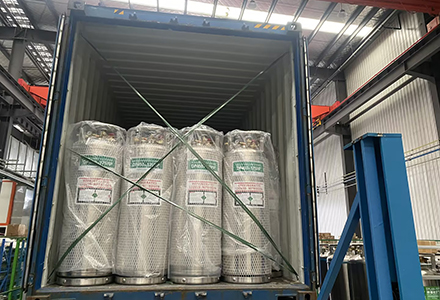
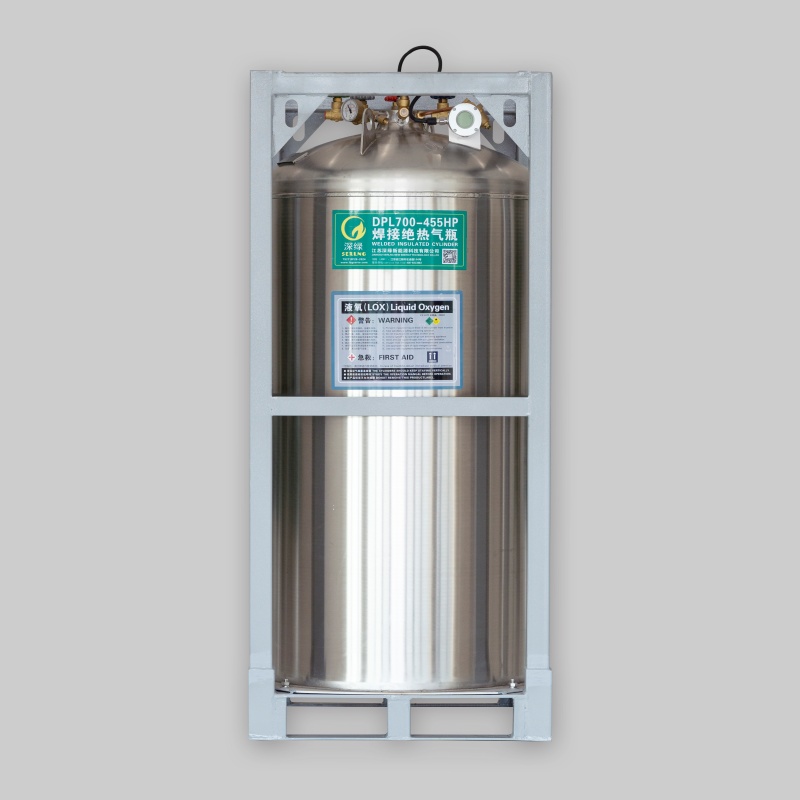
Cryogenic containers with multi-layer insulation systems are advanced thermal storage solutions designed to maintain extremely low temperatures for various applications, including medical, industrial, and scientific uses. These containers are engineered to house cryogenic liquids such as liquid nitrogen, helium, and oxygen, which are utilized in diverse fields such as healthcare for preserving biological samples, in aerospace for rocket propellant storage, and in industrial applications for various manufacturing processes.
At the core of a cryogenic container's functionality is its multi-layer insulation (MLI) system, which plays a crucial role in minimizing heat transfer. An MLI system typically consists of several layers of reflective materials—often made from aluminum or polymer films—separated by layers of insulating materials, such as foam or fiber. This arrangement significantly reduces thermal conduction and convection, effectively keeping the contents at their required low temperatures for extended periods. By reflecting thermal radiation away from the container, MLI systems help maintain the integrity of the stored cryogens, ensuring they remain in their liquid state without excessive evaporation or temperature fluctuations.
The design and construction of cryogenic containers are paramount in developing efficient, safe, and durable solutions. These containers must withstand not only the extreme temperatures required but also the mechanical stresses associated with transport and storage. Hence, materials used in their construction are selected for their strength, lightweight properties, and resistance to cryogenic temperatures. Furthermore, the containment systems are engineered to prevent leaks, ensuring safety while handling hazardous cryogenic substances.
The expertise involved in developing and manufacturing cryogenic containers is profound. Engineers and scientists specializing in thermodynamics, materials science, and mechanical engineering collaborate to enhance the performance and safety of these systems. Continuous research and development efforts focus on improving insulation technologies, reducing weight and costs, and increasing storage capacity, thus pushing the boundaries of cryogenic storage capabilities.
In an era where the demand for innovative cryogenic solutions is on the rise, particularly in the fields of renewable energy and medical research, the significance of a well-designed cryogenic container with a multi-layer insulation system cannot be overstated. It facilitates progress in various scientific endeavors, supports technological advancements, and enhances the efficiency of processes that rely on the unique properties of cryogenic liquids. By maintaining the necessary low temperatures with minimal energy input, these containers play an essential role in a sustainable future.

 cattle semen tank