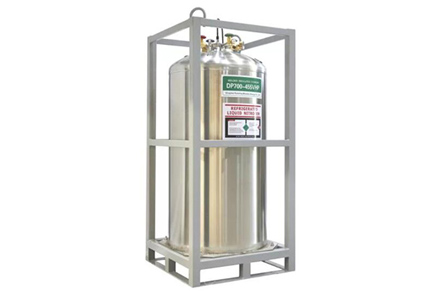
Cryogenic tanks play a crucial role in the storage and transport of liquefied gases at extremely low temperatures, typically below -150°C. These tanks are vital in various industries, including aerospace, medical, and energy sectors, where the preservation of gases such as liquid nitrogen, oxygen, and natural gas is paramount. A key focus in the design of cryogenic tanks is achieving a low evaporation rate, which is essential for maintaining the integrity and efficiency of the stored gas.
The low evaporation rate design of a cryogenic tank is achieved through advanced insulation techniques and materials engineered to minimize heat transfer from the external environment to the stored cryogenic fluid. Multi-layer insulation (MLI) is often utilized, consisting of layers of reflective materials that reduce thermal conduction and radiation. By employing vacuum insulation, designers can create an environment that significantly limits the amount of heat that can reach the tank's contents.
Expertise in thermodynamics and fluid mechanics is critical for engineers involved in the design of cryogenic tanks. They must calculate the appropriate dimensions, insulation thickness, and material properties to ensure optimal performance. For instance, the choice of materials, such as stainless steel or aluminum, must consider their thermal conductivity, strength at low temperatures, and resistance to embrittlement. Furthermore, the design must accommodate pressure changes associated with temperature fluctuations, ensuring that the tank operates safely and efficiently.
Experience plays an essential role in the development of cryogenic tanks, as engineers rely on historical data and case studies to inform their designs. Lessons learned from previous projects help identify potential pitfalls in material performance and thermal management strategies, enabling better velocity in tank operations and reduced environmental impact. Innovations in manufacturing processes and quality control are also crucial to ensure that every unit meets stringent safety standards.
Authoritativeness in this field is demonstrated through adherence to industry standards and regulations, such as those set by organizations like the American Society of Mechanical Engineers (ASME) and the National Fire Protection Association (NFPA). Compliance not only ensures safety but also enhances the reliability of the tank design.
In summary, the design of cryogenic tanks with low evaporation rates is a complex task that requires a deep understanding of heat transfer principles, material science, and industry regulations. By leveraging expertise, experience, and adherence to authoritative standards, engineers can develop effective cryogenic storage solutions that meet the demands of modern applications while minimizing gas loss and promoting sustainability.

 semen tank